


2025
What Businesses Should Know Before Switching to Temperature-Controlled Warehousing in Vancouver
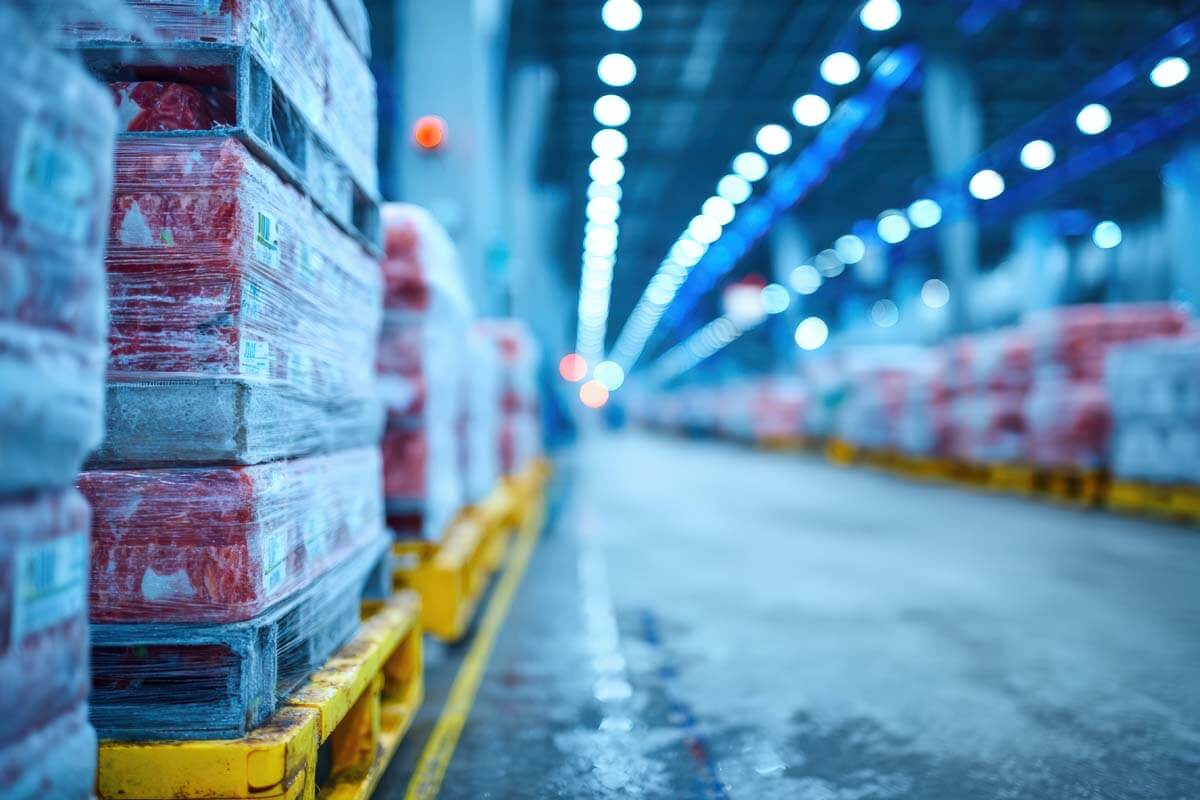
In a city known for its humidity and coastal climate, maintaining a stable environment for sensitive inventory is a high-stakes game. If your product degrades when the temperature swings even five degrees, you are no longer just looking for a roof and four walls. You are looking for temperature-controlled warehousing solution in Vancouver.
Defining Your Climate Needs Beyond Simple Refrigeration
The first thing to understand is that temperature-controlled warehousing is not a one-size-fits-all service. Many people confuse it with simple cold storage, but there are distinct levels of climate management. You need to know exactly which category your product falls into to avoid paying for more than you need or, worse, damaging your stock.
Ambient storage typically refers to a warehouse that is heated in the winter to prevent freezing but does not have active cooling in the summer. For many goods, this is enough. However, true temperature-controlled storage maintains a specific, consistent range year-round, regardless of the weather outside. This is often necessary for items like medical devices or specific types of adhesives and chemicals that can become unstable if they get too warm during a Vancouver heatwave.
When you are interviewing potential warehouse partners, you should be prepared to discuss these specific requirements:
- The exact temperature range required for your product stability
- Humidity control needs to prevent moisture buildup or cardboard degradation
- Specific air exchange rates to prevent the accumulation of gasses or odors
- Tolerances for how long a product can be out of its "zone" during loading
Understanding these nuances prevents "sticker shock" when you see the rates for highly specialized rooms. The tighter the range and the more monitoring required, the higher the cost per pallet will be.
The Infrastructure of Reliability and Backup Systems
In a standard warehouse, a power outage is an inconvenience that might delay shipping by a few hours. In a temperature-controlled environment, a power outage is a potential catastrophe. Before you trust a facility with your sensitive inventory, you need to look at their "fail-safes." This is especially relevant in BC, where winter storms or heavy rains can occasionally disrupt the local grid.
A professional facility should have redundant cooling and heating units. If one compressor fails on a humid July afternoon, there should be another one ready to kick in immediately. You should also ask about their backup power capabilities. Does the facility have on-site generators capable of running the climate control systems for several days?
Beyond the hardware, you should look for the following safety and monitoring features:
- 24/7 remote monitoring with automated alerts sent to facility managers
- Regular calibration logs for all thermometers and sensors
- Physical insulation quality of the warehouse doors and loading docks
- Strict maintenance schedules for the HVAC and refrigeration systems
If a warehouse cannot show you a clear protocol for what happens during a power failure, they are not the right partner for sensitive goods. Your business's reputation depends on the integrity of the product that reaches the customer, and that integrity starts with the infrastructure of the building.
Mapping the Logistics of the "Cold Chain" Beyond the Warehouse
Your responsibility for the temperature of your goods does not end at the warehouse door. This is often where businesses stumble. You can have the most sophisticated climate-controlled room in Surrey, but if your product sits on a hot loading dock for three hours waiting for a truck, the damage is already done. This is the concept of the "cold chain," and it requires seamless coordination.
In Vancouver, traffic on the Knight Street Bridge or the Lions Gate can be unpredictable. You need to ensure that the transport companies you use are as committed to climate control as your warehouse is. This often involves using reefers (refrigerated trailers) even for short hops to a retail distribution center. You also need to consider the "staging" area of the warehouse. Is the loading dock itself climate-controlled, or is it exposed to the outside air?
To maintain a perfect chain of custody, consider the following logistical steps:
- Pre-cooling or pre-heating trailers before the product is loaded
- Using thermal blankets or specialized packaging for smaller shipments
- Real-time GPS and temperature tracking during transit to catch deviations
- Clear hand-off procedures between the warehouse staff and the driver
If there is a gap in this chain, the liability can be difficult to pin down. By ensuring that every partner in your network understands the temperature requirements, you protect yourself from costly insurance claims and disappointed retailers.
Securing Your Strategy for the Future
Moving to a temperature-controlled environment is a major milestone that can open doors to new markets and higher-value customers. It signals that your business is ready to handle the complexities of sophisticated product lines.
By focusing on precise climate definitions, robust infrastructure, seamless logistics, and the true cost of compliance, you can make this transition without the common pitfalls that catch many growing brands off guard.
The Vancouver market is uniquely positioned to help you scale, provided you have the right information and the right partners.
As you look at your growth for the coming year, consider how a stable environment can protect your bottom line and your brand's integrity. The "cold truth" is that preparation is the only way to ensure your success in this specialized sector.
Freight Xperts specializes in Vancouver 3PL warehouse services and trucking across North America. We specialize in Vancouver 3PL Warehousing services, full truckload and less than truckload services including dry van, temperature controlled, and flatbed, plus cross-border shipping.
Our goal is to provide the highest level of service in the most cost-effective manner possible for the warehousing and trucking of your products ranging from single pallets to full truck loads.